Social Contact: Acts of Kindness & Support
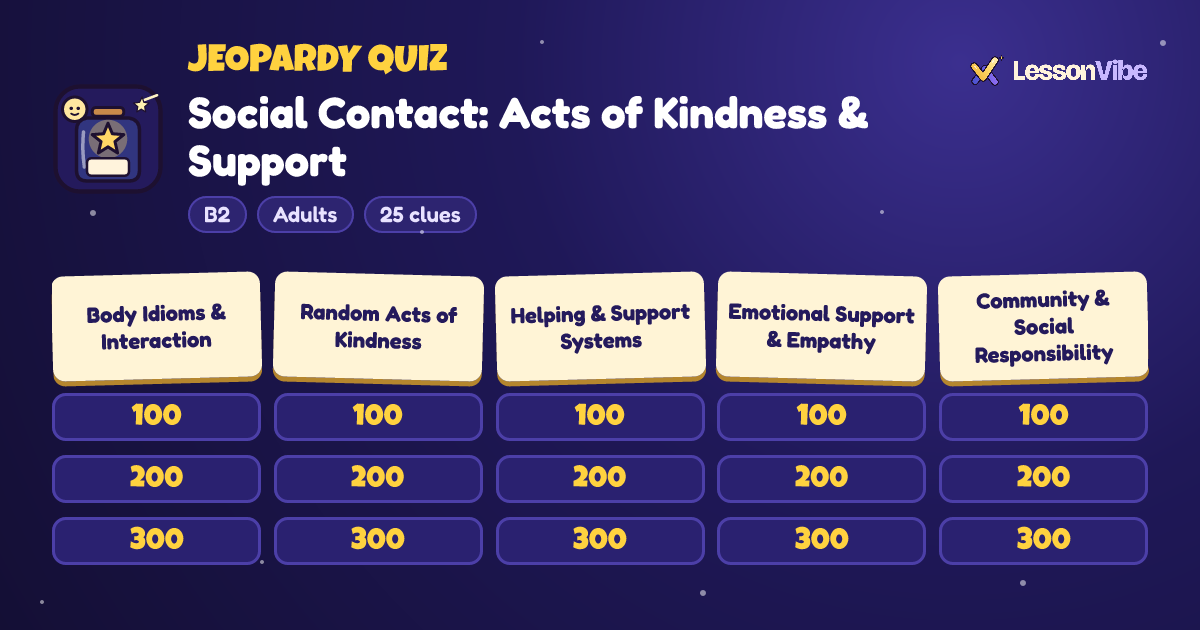
An interactive ESL Jeopardy game for adult learners at B2 level exploring social interaction, body idioms, random acts of kindness, helping others, and emotional support in authentic contexts.
A free Jeopardy Quiz for Adults at CEFR B2 level. Topic: SOCIAL CONTACT.
Categories
- Body Idioms & Interaction
- Random Acts of Kindness
- Helping & Support Systems
- Emotional Support & Empathy
- Community & Social Responsibility
Questions
- Body Idioms & Interaction (100): Complete this idiom: When you treat someone in an unfriendly way, you give them the cold ___.
- Body Idioms & Interaction (200): If someone 'lends you a hand,' what are they doing for you?
- Body Idioms & Interaction (300): Explain what it means when a person 'puts their foot down' during a conversation about helping a friend in need.
- Body Idioms & Interaction (400): Describe a situation where someone might 'have the nerves' to ask for help. What does this idiom suggest about their character?
- Body Idioms & Interaction (500): Compare 'having someone's back' with 'giving someone the cold shoulder.' How do these two idioms represent opposite approaches to social support?
- Random Acts of Kindness (100): What is a random act of kindness? Give a simple definition.
- Random Acts of Kindness (200): Name three examples of random acts of kindness you could perform for a stranger in your community.
- Random Acts of Kindness (300): Explain how a random act of kindness might create a 'ripple effect' in a community.
- Random Acts of Kindness (400): Discuss why people perform random acts of kindness even when they receive no recognition or thanks. What motivates them?
- Random Acts of Kindness (500): Imagine you witnessed a stranger performing a random act of kindness. How would this experience change your perspective on humanity, and what would you do as a result?
- Helping & Support Systems (100): Name two types of people or organizations that provide help and support to those in need.
- Helping & Support Systems (200): What is the difference between formal support and informal support when helping someone?
- Helping & Support Systems (300): Describe the steps someone should take when they want to ask for help from a friend or family member.
- Helping & Support Systems (400): Analyze the potential challenges that prevent people from asking for help when they are struggling. What barriers do they face?
- Helping & Support Systems (500): Reflect on your own experience: How has receiving support from others changed your ability to overcome a challenge? What did you learn about the importance of asking for help?
- Emotional Support & Empathy (100): What does it mean to show empathy to someone who is struggling?
- Emotional Support & Empathy (200): Name four ways you can emotionally support a friend who is going through a difficult time.
- Emotional Support & Empathy (300): Explain the difference between sympathy and empathy. Why is empathy more effective in supporting others?
- Emotional Support & Empathy (400): Discuss how active listening contributes to emotional support. What specific techniques should you use when someone is sharing their problems?
- Emotional Support & Empathy (500): Describe a time when you struggled to show empathy to someone. What made it difficult, and how would you approach the situation differently now?
- Community & Social Responsibility (100): What is social responsibility? Give a definition in your own words.
- Community & Social Responsibility (200): Identify three ways individuals can contribute to their community's well-being.
- Community & Social Responsibility (300): Explain how volunteering benefits both the person who volunteers and the community they serve.
- Community & Social Responsibility (400): Evaluate the relationship between social responsibility and mental health. How does helping others affect a person's well-being?
- Community & Social Responsibility (500): Compare your personal values regarding community responsibility with those of your family or culture. How have these values shaped the way you help and support others?