Job Application Jeopardy: Unit 8
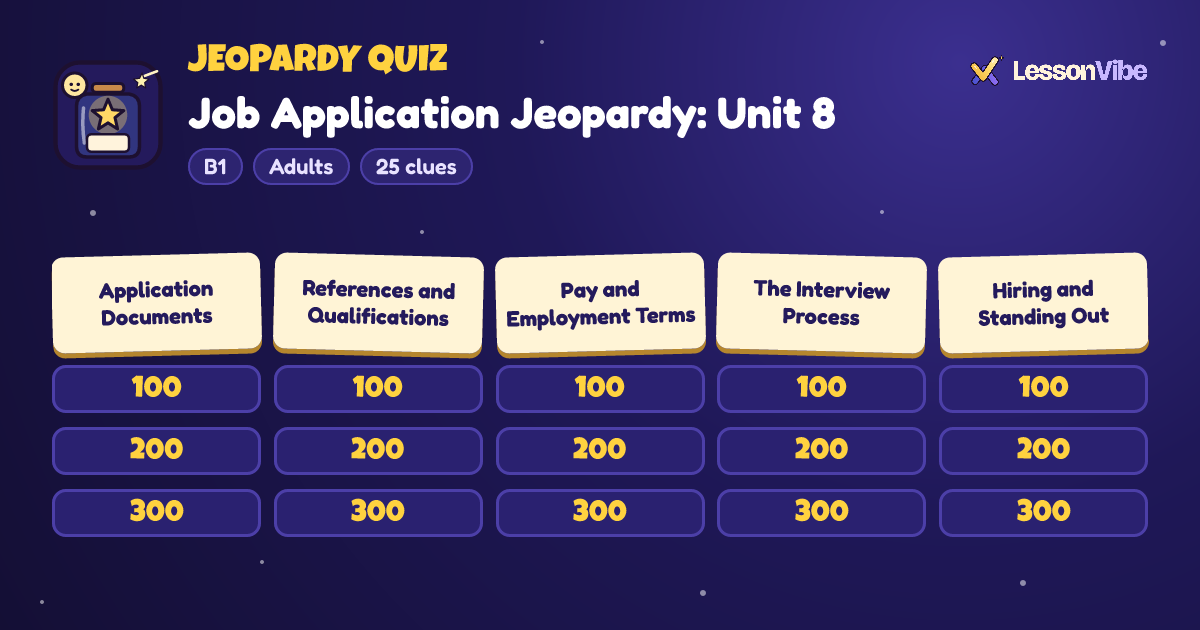
An interactive Jeopardy game for adult ESL learners at B1 level. Players answer questions about job applications, interviews, and employment vocabulary. The game covers key terms and processes from Unit 8, with questions designed to encourage speaking and discussion about earning a living.
A free Jeopardy Quiz for Adults at CEFR B1 level. Topic: talk about applying for a jobs.
Categories
- Application Documents
- References and Qualifications
- Pay and Employment Terms
- The Interview Process
- Hiring and Standing Out
Questions
- Application Documents (100): When you apply for a job, you need to send this document that shows your work history and skills.
- Application Documents (200): Describe what you do when you complete an application form for a job.
- Application Documents (300): Why is it important to review the job description before you apply for a position?
- Application Documents (400): Explain the difference between sending an up-to-date CV and completing an application form. When might an employer ask for both?
- Application Documents (500): If you were applying for a job in your field, what information would you include in your CV to stand out against other candidates? Give at least two examples.
- References and Qualifications (100): This is a person who can tell an employer about your work skills and character.
- References and Qualifications (200): What does it mean to get a reference from your current or former employer?
- References and Qualifications (300): Why do employers ask candidates if they have the necessary qualifications before they hire someone?
- References and Qualifications (400): Compare having a strong reference with having the necessary qualifications. Which one do you think is more important when applying for a job, and why?
- References and Qualifications (500): Describe a situation where you might need to get a reference form your current or former employer. What would you ask them to say about you?
- Pay and Employment Terms (100): This is the amount of money you earn each month at your job.
- Pay and Employment Terms (200): Explain what an hourly rate is and give an example of a job where people are paid this way.
- Pay and Employment Terms (300): What is the difference between receiving wages and earning a monthly salary?
- Pay and Employment Terms (400): Would you prefer to receive wages based on an hourly rate or earn a monthly salary? Explain your reasons.
- Pay and Employment Terms (500): Compare the advantages and disadvantages of earning a monthly salary versus receiving wages based on an hourly rate. When might each be better for a worker?
- The Interview Process (100): This is a meeting between you and an employer to discuss a job position.
- The Interview Process (200): What should you do during an interview to stand out against other candidates?
- The Interview Process (300): Why would an interviewer ask you questions at an interview instead of just reading your CV?
- The Interview Process (400): Explain what it means to ask random questions at an interview. Is this a good strategy? Why or why not?
- The Interview Process (500): Describe how you would prepare for a job interview. What questions would you ask the interviewer, and what would you want to learn about the job and company?
- Hiring and Standing Out (100): This is what an employer does when they choose someone to work for them.
- Hiring and Standing Out (200): What does it mean to stand out against other candidates when you apply for a job?
- Hiring and Standing Out (300): What are three ways you could stand out against other candidates when applying for a job?
- Hiring and Standing Out (400): If you were an employer trying to hire someone, what qualities would make you choose one candidate over another? Explain your choices.
- Hiring and Standing Out (500): Think about a job you would like to apply for. How would you stand out against other candidates? What specific things would you do or show to make the employer want to hire you?