Consumerism & Gen Z Culture Jeopardy
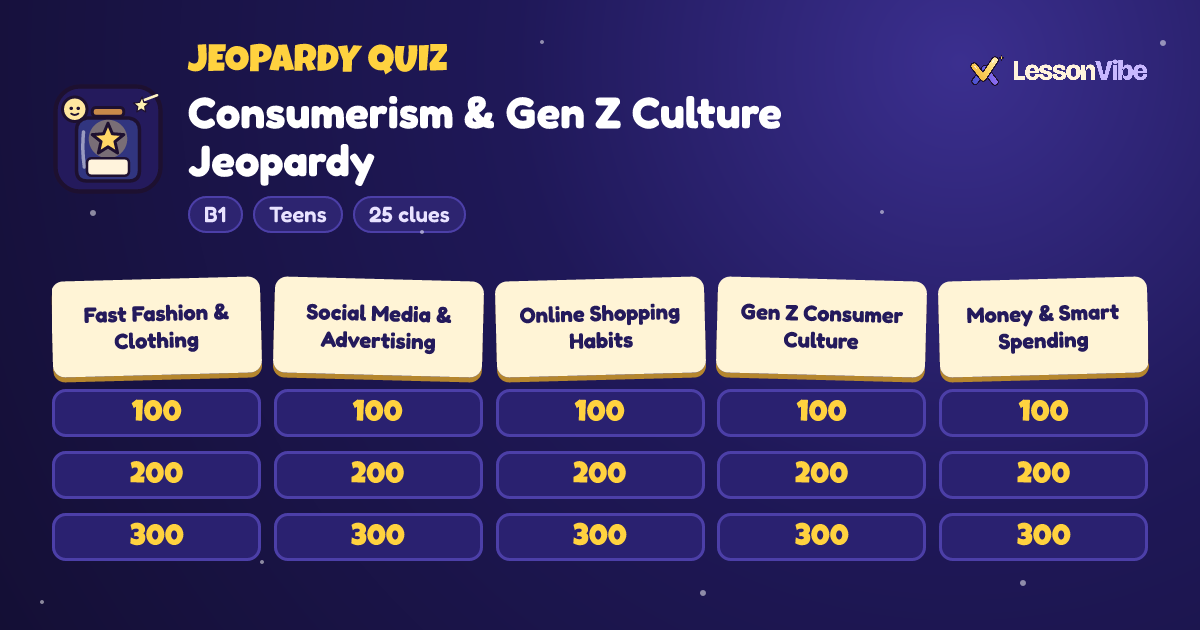
An interactive Jeopardy game exploring fast fashion, online shopping, social media advertising, and consumer habits among Gen Z. Players answer questions about trends, personal choices, and the impact of digital culture on buying decisions.
A free Jeopardy Quiz for Teens at CEFR B1 level. Topic: consumerism, gen Z, fast fashion, online shopping, advertising. social media.
Categories
- Fast Fashion & Clothing
- Social Media & Advertising
- Online Shopping Habits
- Gen Z Consumer Culture
- Money & Smart Spending
Questions
- Fast Fashion & Clothing (100): What is the name of stores that sell cheap clothes that change styles very quickly?
- Fast Fashion & Clothing (200): Why do many teenagers buy clothes from fast fashion stores instead of expensive brands?
- Fast Fashion & Clothing (300): Describe what happens to clothes after people wear them only a few times and throw them away.
- Fast Fashion & Clothing (400): How is buying from fast fashion different from buying from second-hand shops or vintage stores? Explain two differences.
- Fast Fashion & Clothing (500): If you wanted to reduce your impact on the environment, what changes could you make to how you buy and wear clothes? Give at least two ideas.
- Social Media & Advertising (100): What do we call the people on social media who post about products they like and get paid to do it?
- Social Media & Advertising (200): Why do companies pay influencers to show their products on Instagram or TikTok?
- Social Media & Advertising (300): Explain how seeing perfect photos of products on social media might make you want to buy something you do not really need.
- Social Media & Advertising (400): What is the difference between a real advertisement and a sponsored post from an influencer? Why is it important to know the difference?
- Social Media & Advertising (500): Think about your favorite social media platform. Describe what advertising tricks you notice that try to make you buy things, and explain why they work on young people.
- Online Shopping Habits (100): What is the main reason Gen Z prefers to shop online instead of going to physical stores?
- Online Shopping Habits (200): Why do online stores offer free shipping and easy returns to customers?
- Online Shopping Habits (300): Explain what happens when you add items to your shopping cart but do not buy them right away.
- Online Shopping Habits (400): How do online stores use information about what you look at and buy to influence your shopping decisions? Give an example.
- Online Shopping Habits (500): Compare how you shop online with how your parents or older family members shop. What are the main differences in what you buy and why?
- Gen Z Consumer Culture (100): What does FOMO mean, and how does it relate to buying things?
- Gen Z Consumer Culture (200): Why do limited edition products or flash sales make people want to buy things faster?
- Gen Z Consumer Culture (300): Describe how posting photos of new things you bought on social media can influence other people your age to buy the same things.
- Gen Z Consumer Culture (400): What is the difference between buying something because you need it and buying something because you want to show it off? How do you know the difference?
- Gen Z Consumer Culture (500): Think about a time you wanted to buy something because of social media or peer pressure. Explain why you wanted it and whether you regret the purchase now.
- Money & Smart Spending (100): What is a budget, and why is it important for young people to have one?
- Money & Smart Spending (200): Why do credit cards and buy-now-pay-later apps make it easy for young people to spend more money than they have?
- Money & Smart Spending (300): Explain what happens when someone buys too many things online and cannot pay back the money they owe.
- Money & Smart Spending (400): What are three questions you should ask yourself before buying something online to help you make a smart decision?
- Money & Smart Spending (500): If you had a limited amount of money to spend each month, how would you decide what to buy and what to skip? Explain your method.