Book Genres Jeopardy
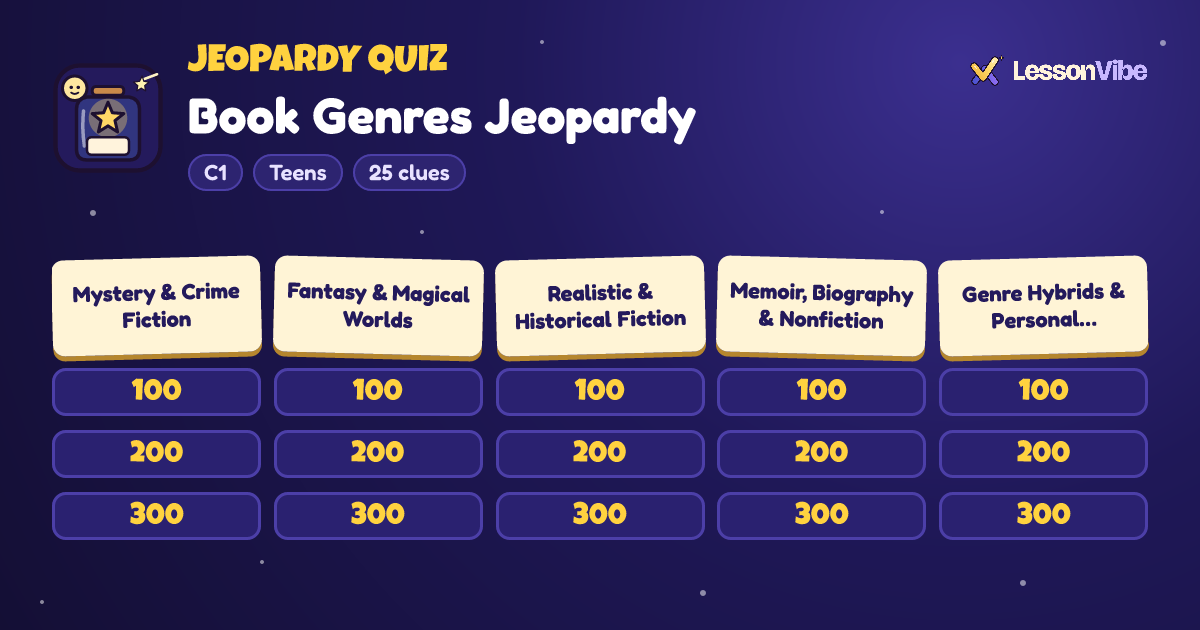
An interactive Jeopardy-style game exploring diverse book genres including mystery, fantasy, realistic fiction, historical fiction, and memoir. Designed for C1 learners to discuss genre conventions, compare narratives, and analyze literary elements through communicative tasks.
A free Jeopardy Quiz for Teens at CEFR C1 level. Topic: Book genres.
Categories
- Mystery & Crime Fiction
- Fantasy & Magical Worlds
- Realistic & Historical Fiction
- Memoir, Biography & Nonfiction
- Genre Hybrids & Personal Preferences
Questions
- Mystery & Crime Fiction (100): In mystery novels, what is the central literary device that keeps readers engaged throughout the narrative?
- Mystery & Crime Fiction (200): Explain how the concept of a 'red herring' functions within mystery plots and why authors deliberately include misleading information.
- Mystery & Crime Fiction (300): Compare the narrative structure of a traditional detective mystery with a psychological thriller. What are the key differences in how tension is built?
- Mystery & Crime Fiction (400): Discuss how the 'whodunit' convention has evolved in contemporary crime fiction. What modern elements have authors incorporated to challenge traditional genre expectations?
- Mystery & Crime Fiction (500): If you were to write a mystery novel, how would you balance providing enough clues for readers to solve the puzzle themselves while still maintaining genuine surprise? Justify your approach.
- Fantasy & Magical Worlds (100): What is 'world-building' in fantasy literature and why is it essential to the genre?
- Fantasy & Magical Worlds (200): Describe the difference between high fantasy and urban fantasy in terms of setting and narrative scope.
- Fantasy & Magical Worlds (300): Analyze how a consistent magic system contributes to the credibility and coherence of a fantasy narrative. Provide an example of how inconsistent magic could undermine the story.
- Fantasy & Magical Worlds (400): Evaluate the role of prophecy and destiny in epic fantasy literature. How do these elements shape character agency and plot development, and what are the risks of relying too heavily on them?
- Fantasy & Magical Worlds (500): Design a magic system for your own fantasy world. Explain what rules govern it, what limitations exist, and how these constraints would drive your plot forward rather than resolve conflicts too…
- Realistic & Historical Fiction (100): What is the primary purpose of realistic fiction as a literary genre?
- Realistic & Historical Fiction (200): Explain how historical fiction differs from pure history. What creative liberties do authors take and why?
- Realistic & Historical Fiction (300): Compare the narrative techniques used in contemporary realistic fiction with those in historical fiction. How does the author's relationship with time and research differ?
- Realistic & Historical Fiction (400): Discuss how authors of historical fiction navigate the ethical responsibility of portraying marginalized voices and perspectives from the past. What challenges arise when fictionalizing real…
- Realistic & Historical Fiction (500): If you were writing historical fiction set during a significant moment in your country's past, how would you research authentically while ensuring your narrative remained compelling to modern…
- Memoir, Biography & Nonfiction (100): What is the main distinction between a biography and an autobiography?
- Memoir, Biography & Nonfiction (200): Describe how memoir differs from autobiography in scope, focus, and the author's intention.
- Memoir, Biography & Nonfiction (300): Analyze the literary techniques that nonfiction writers employ to engage readers emotionally while maintaining factual accuracy. How do these differ from fiction strategies?
- Memoir, Biography & Nonfiction (400): Examine the ethical implications of memoir writing. How should authors navigate the tension between personal truth and the potential impact on other people depicted in their stories?
- Memoir, Biography & Nonfiction (500): Consider a significant relationship or experience from your own life. How would you transform it into a compelling memoir narrative? What would you emphasize, what would you omit, and why?
- Genre Hybrids & Personal Preferences (100): What is a genre hybrid and can you name one example?
- Genre Hybrids & Personal Preferences (200): Explain what advantages and challenges arise when an author combines elements from different genres in a single narrative.
- Genre Hybrids & Personal Preferences (300): Compare your preferred book genre with another genre you find less appealing. What specific elements attract or repel you, and how do these preferences reflect your values as a reader?
- Genre Hybrids & Personal Preferences (400): Evaluate how contemporary publishing trends toward genre-blending reflect changes in reader expectations and cultural values. What does this shift suggest about the future of literary categorization?
- Genre Hybrids & Personal Preferences (500): Imagine you are pitching a new genre hybrid novel to a publisher. Describe your concept, explain which two genres you are combining, justify why this combination would appeal to readers, and…